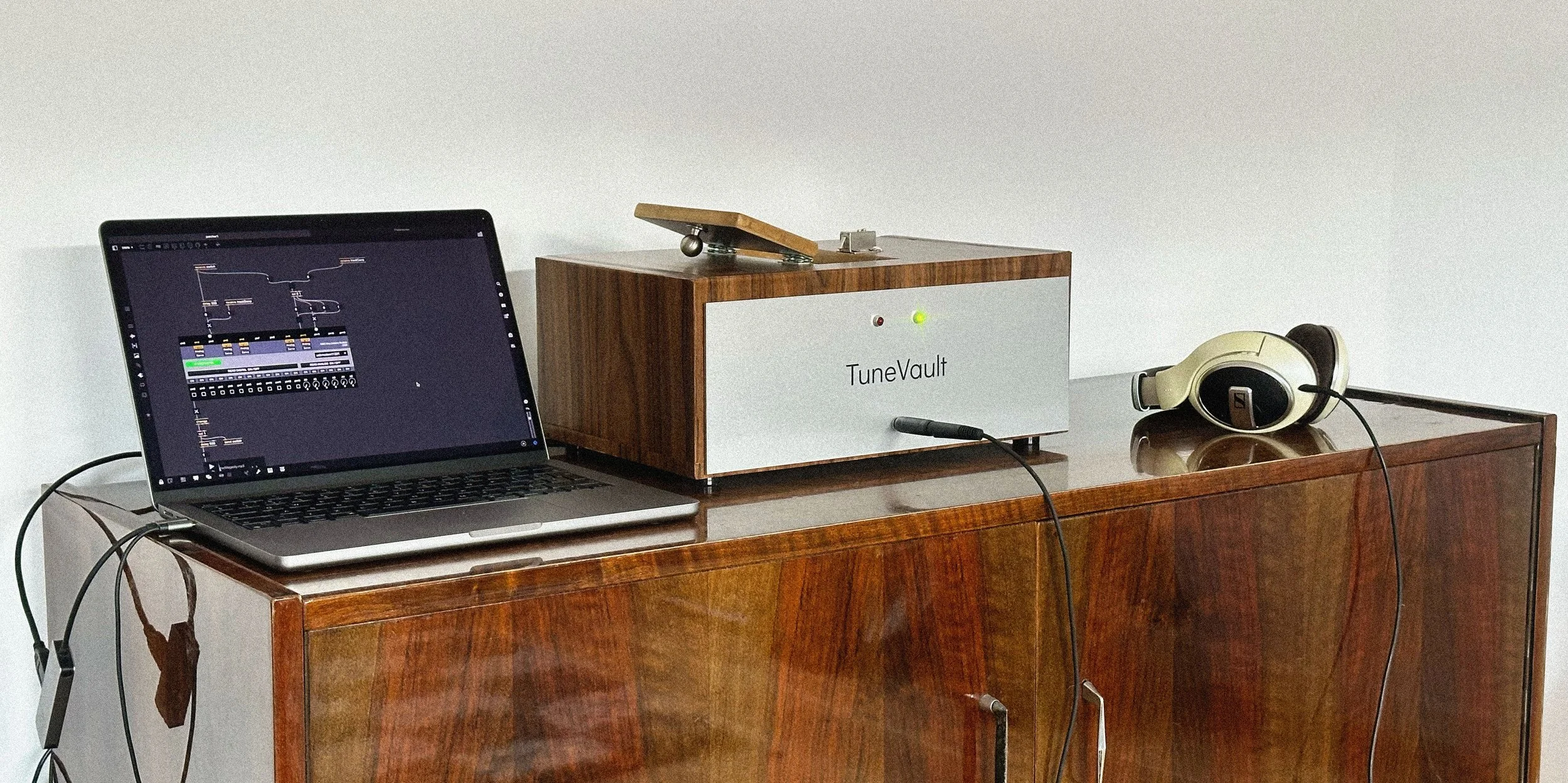
My Graduation Project: TuneVault
TuneVault is a critical design project that invites you to reflect on how well you actually listen to music in the age of streaming services.
READ EXPLORATION
“How can a critical design expose distraction and superficial music consumption caused by smartphones in the digital age?”
But why?
Before the age of smartphones, many of your phone’s functions required separate devices — calculators, alarm clocks, flashlights, and, of course, music players.
But as is often said in UX design and product development: a product that tries to do too many things ends up doing none of them well.
Does that design philosophy also apply to listening to music?
Well, during my graduation project I discovered that the transition of music listening to our smartphones hasn’t necessarily improved the listening experience.
We live in a time where streaming music has become the norm — 24% of the world’s population now listens to music through a subscription-based platform like Spotify [1]. This has made music more accessible and easier to enjoy than ever before. But this convenience also comes with a certain sense of transience.
The endless choice offered by Spotify can cause decision fatigue or make you constantly wonder if there’s something better you could be listening to at that very moment. It’s also incredibly easy to get distracted from the music itself when your phone is filled with apps designed to capture your attention.
Researchers describe this current listening behavior of streaming users as “soundtracking” [2]: the phenomenon where music is no longer the main activity but rather fades into the background.
In contrast to the rise of streaming, the past few years have seen a true vinyl renaissance. In fact, 2024 marks the second consecutive year that more LPs were sold than CDs [3].
Quite remarkable, considering that listening to music on vinyl is far more cumbersome than using Spotify. Yet an ever-growing group of listeners seeks to escape the fleeting nature of streaming and is longing for a more tangible and mindful listening experience.
Positioning
One of the first pieces of advice you get when starting your graduation project is this: choose a topic you’re genuinely passionate about.
And if there’s one thing I’m passionate about, it’s music. I can’t imagine my life without it — I’d almost categorize it as a basic human need. Certain songs, or sometimes even entire albums, have helped me through difficult times, or made the good moments even better.
Alongside this passion for music, I also developed a hobby of listening to and collecting vinyl records. Apparently, there’s something about this “vinyl experience” that’s missing in the way we currently listen to music. During my graduation project, I tried to uncover what exactly makes listening to vinyl so special. Why do some people prefer vinyl over a streaming service like Spotify?
However, I’m also aware that I won’t convince people to abandon music streaming altogether and convert to vinyl. That’s not the point. With my critical design, I want to encourage people to reflect on their dependency on their smartphones and how this affects their listening experience.
TuneVault aims to spark discussion and dialogue about digital distraction in our modern society — and how, in this case, it influences the way we consume music in the age of streaming.
TuneVault
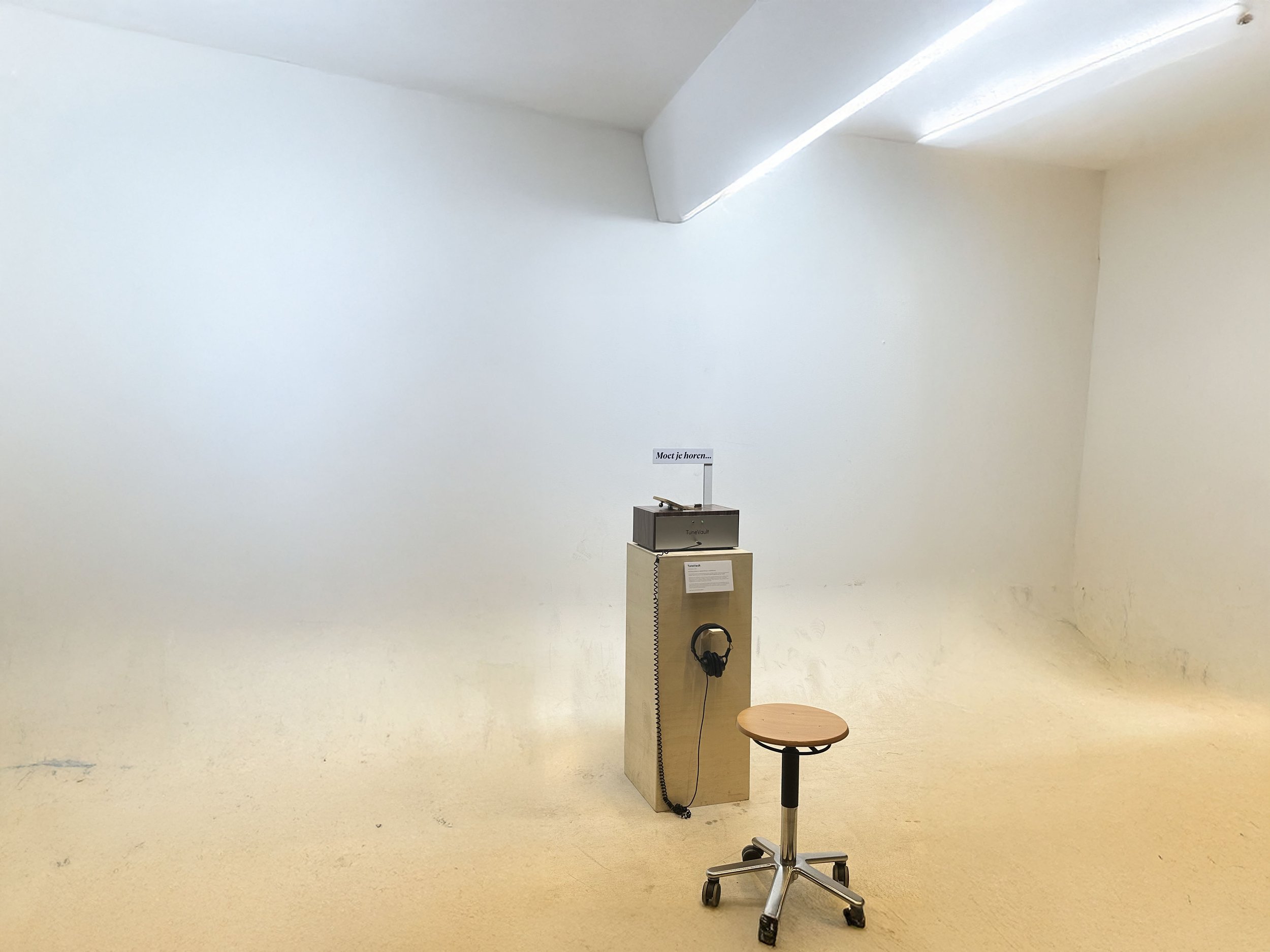
TuneVault is a critical design project that questions the way we consume music today.
In an era where music often fades into the background and is constantly interrupted by notifications, doomscrolling, and other distractions, TuneVault forces the user to fully surrender their phone — allowing complete focus on one thing only: music.
The user places their phone inside the TuneVault, and as soon as the lid is closed, it automatically locks. From that moment on, the phone becomes completely inaccessible. The lid only unlocks once the piece of music has finished playing.
There’s only one thing left for the listener to do: listen.
Sources:
[1] Infographic: How does the world consume music? (2024, 10 september). World Economic Forum. https://www.weforum.org/stories/2023/02/world-consume-music-infographic
[2] Fuentes, C., Hagberg, J., & Kjellberg, H. (2019). Soundtracking: music listening practices in the digital age. European Journal Of Marketing, 53(3), 483–503. https://doi.org/10.1108/ejm-10-2017-0753
[3] Davis, W. (2024, 26 maart). Vinyl records outsell CDs for the second year running. The Verge. https://www.theverge.com/2024/3/26/24112369/riaa-2023-music-revenue-streaming-vinyl-cds-physical-media